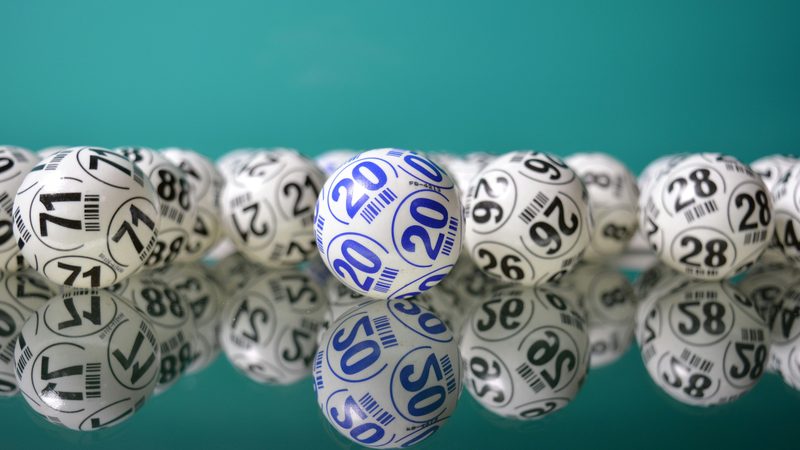
 Photograph by Alejandro Garay.
The technique
The advice shows up everywhere: spread your numbers out, avoid picking numbers next to each other, because "runs don't come up." Some players go further and manually break up any two adjacent numbers before locking in a ticket, treating a pair like 22-23 as a sign the ticket is somehow badly built.
What its fans say
It feels intuitively true. A draw of 3-4-5-6-7-8-9 looks engineered, not random. It doesn't have the scattered, "random-looking" shape most of us expect chance to produce. If you lined up ten possible draws and asked someone to pick the fake one, a tidy run of consecutive numbers is exactly the one most people would flag.
What the maths says
This is a textbook case of what actual randomness looks like versus what we expect it to look like, and the gap between the two is bigger than most people guess. We calculated the exact probability of a real draw containing at least one consecutive pair, for all four Australian lotteries:
| Game | Draw size | P(at least one consecutive pair) |
|---|
| Saturday Lotto / Weekday Windfall | 6 of 45 | 52.9% |
| Oz Lotto | 7 of 47 | 64.3% |
| Powerball | 7 of 35 | 76.8% |
Every single one of these games is more likely than not to produce at least one consecutive pair. It's not a rare, suspicious pattern. Across the board, it's the norm. The reason is simple once you see it: with 6 or 7 numbers spread across a pool of only 35–47, there just isn't enough room for them to avoid bumping into a neighbour most of the time. "Spread out and random-looking" is the rarer outcome, not the common one.
The genuinely interesting twist
We didn't just trust the theory. We checked it against every real draw this site has on file, for all four games:
| Game | Theoretical rate | Actual rate, real draws |
|---|
| Oz Lotto | 64.3% | 58.9% (53 of 90 draws) |
| Powerball | 76.8% | 76.7% (69 of 90 draws) |
| Saturday Lotto | 52.9% | 52.2% (47 of 90 draws) |
| Weekday Windfall | 52.9% | 46.7% (42 of 90 draws) |
Real draws land close to the theoretical prediction every time, within the kind of gap you'd expect from a 90-draw sample, exactly the law of large numbers doing what it does. Avoiding consecutive numbers doesn't make a ticket more "random." It makes it rarer than an actual random draw tends to be, which is the opposite of the intended effect.
My take
This is one of my favourite examples on the whole site, because unlike most lottery myths, this one isn't just harmless. It's actively backwards. People manually avoid the exact pattern that real randomness produces most of the time, in the name of looking more random. If you've been quietly swapping out consecutive pairs before locking in a ticket, you can stop. You were making your numbers less typical of an honest draw, not more.
Verdict
Avoiding consecutive numbers doesn't protect you from anything and doesn't improve anything. Every specific combination, consecutive or scattered, has exactly the same probability. If anything, it nudges your ticket away from what a real draw usually looks like. Pick them, avoid them, or ignore the whole question. The barrel doesn't know or care either way.
No number pattern changes the odds of a random draw. This is opinion and entertainment, not advice. See how sample space and probability actually work for the maths behind this.
Every figure on this page is computed from the 90-draw window on file as of the 12 August 2026 draw. Those counts shift each time a new draw is added and the oldest ages out, so treat them as a snapshot rather than a live number. Past frequency does not predict future results.
References
1. The Lott, Oz Lotto results & number frequencies ("each number has an equal chance of being drawn"): thelott.com/oz-lotto/results
2. "The cross-sectional 'Gambler's Fallacy': Set representativeness in lottery number choices," Journal of Economic Behavior & Organization (2014), on why players systematically avoid patterns that look "too structured": sciencedirect.com
3. Probability figures above are exact combinatorial calculations (adjacent-subset counting via the standard stars-and-bars identity), verified against this site's own real draw history, method available on request.